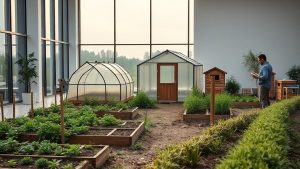
Healthy soil is a living system, not an inert growing medium. That single idea changes everything about how you approach it. When you set out to improve soil health naturally, you are not fixing a dead substance with the right bag of chemicals. You are feeding an ecosystem that already exists under your feet, even if it has been neglected for years. The bacteria, fungi, worms, beetles and microscopic predators in a single teaspoon of decent soil outnumber the people on the planet. Your job is to give them the conditions they need, then get out of the way.
This matters whether you tend a few raised beds behind a semi or manage a couple of acres of paddock and veg plot. The principles are the same. Only the scale changes. Get the fundamentals right and you will spend less on inputs, water less in dry spells, and watch plants shrug off problems that used to wipe them out.
What Healthy Soil Actually Is
Most people picture soil as dirt: a brown powder that holds plants upright. In reality, good soil is roughly half mineral particles, a quarter water, a quarter air, and a small but crucial fraction of organic matter. That organic matter is where the magic happens. It is the decomposed remains of plants, animals and microbes, and it does three jobs at once. It feeds the biology, it holds water like a sponge, and it glues mineral particles into crumbs that let air and roots move freely.
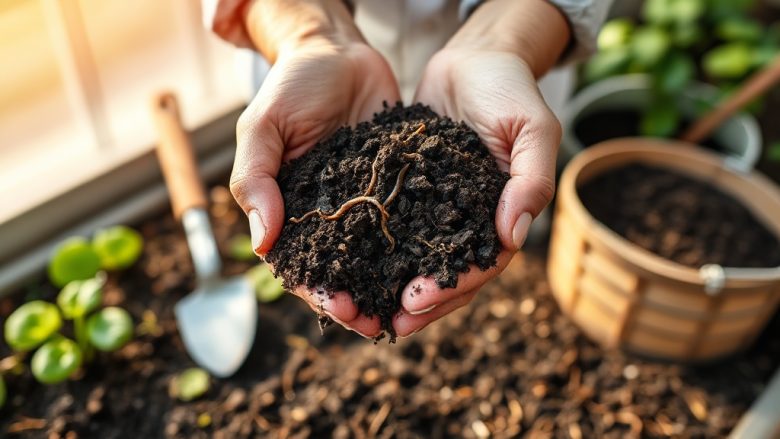
A healthy soil has structure. Dig a spadeful from a good patch and you should see crumbly aggregates rather than a compacted block or dusty powder. It should smell earthy and slightly sweet, a scent caused by actinobacteria doing their work. It should be full of visible life: worms, fine white fungal threads, tiny springtails. And it should drain without waterlogging while still holding moisture through a dry week.
When any of those qualities are missing, the cause is usually one of a few things. Compaction from machinery or foot traffic. Loss of organic matter through repeated digging and bare soil. Chemical imbalance from years of synthetic fertiliser. Or simply the absence of living roots for much of the year. None of these are permanent. All of them respond to the same handful of natural principles.
The Four Principles That Do the Real Work
Strip away the jargon and almost every credible natural soil method comes back to four ideas. Keep these in mind and you will rarely go wrong, whatever specific amendment or technique you decide to use.
Keep the soil covered. Bare soil is vulnerable soil. Rain hammers it, sun bakes it, wind dries it, and weeds colonise it. A permanent cover of living plants, dead mulch or crop residue protects the surface, moderates temperature, and feeds the biology below as it breaks down. In a garden this might be a layer of compost, straw or leaf mould. On a smallholding it might be a green manure or a standing stubble left over winter. The point is that the soil surface should almost never see direct sunlight.
Disturb it as little as possible. Every time you dig or plough, you shatter fungal networks, expose stored carbon to the air, and reset the structure that took years to build. That does not mean you can never move soil. It means you do it with purpose, not as a habit. No-dig beds, direct sowing, and shallow surface cultivation all respect this principle. The less you turn the soil, the more the fungal side of the food web can establish, and fungi are what build the stable crumbs that make soil feel like cake rather than concrete.
Keep living roots in the ground for as much of the year as you can. Plants pump sugars out through their roots and trade them with microbes for nutrients. When soil sits bare, that trade stops. Cover crops, undersowing, perennial plants and even a scattering of hardy greens through winter all keep the underground economy running.
Grow a diversity of plants. Different plants support different microbes. A monoculture feeds a narrow community; a mixed planting feeds a wide one. Diversity above ground creates diversity below, and diverse soil communities are more resilient to drought, disease and disturbance. You do not need a botanically perfect polyculture. Mixing a few species in a bed, rotating crops, and letting some flowering plants run to seed all help.
Feeding the Soil Instead of the Plant
Once you accept the four principles, the practical question becomes what to actually put on the ground. The natural answer is organic matter, in as many forms as you can get hold of.
Compost is the workhorse. Well-made compost adds biology, nutrients and humus in one go. It does not need to be perfect or fast. A heap that gets turned occasionally and sits for six months will still produce something worth spreading. Leaf mould is slower but superb for structure, especially on heavy clay. Aged manure, provided it is genuinely well rotted, adds bulk and fertility. Woodchip is best used as a surface mulch rather than dug in, because it feeds fungi at the surface and slowly builds a crumb structure underneath.
The mistake many people make is treating these as fertiliser. They are not. They are food for the organisms that will, in turn, feed your plants. Spread them on the surface, let worms and weather work them in, and resist the urge to dig them under. A mulch of a few centimetres is usually enough. More than that and you can smother the soil or create a soggy mat that never dries.
If your soil is very poor, you can speed things up with a light application of rock dust or a seaweed-based feed, but these are supporting acts. Organic matter is the headline.
Common Mistakes That Undo Good Intentions
Plenty of well-meaning gardeners damage their soil while trying to help it. Knowing the pitfalls saves years.
Over-digging is the big one. It feels productive, and it does aerate soil in the short term, but it destroys the fungal networks that give soil its structure. If you have been double-digging for years, try leaving one bed undug for a season and compare. Most people are surprised.
Bare winter soil is another. Leaving beds empty from October to March loses nutrients to rain and leaves the surface exposed. A green manure sown in early autumn, even if you never dig it in, keeps roots alive and protects the surface.
Then there is the overuse of quick fixes. Soluble fertilisers give plants a sugar rush and can suppress the very microbes that would otherwise supply nutrients slowly. Pesticides and herbicides rarely distinguish between the organisms you want and the ones you do not. And compacting the soil by walking on wet beds or driving machinery over wet ground can undo a decade of gentle improvement in an afternoon.
Finally, impatience. Soil biology responds to consistent treatment over years, not weeks. A single season of mulching will help. Three seasons will transform a patch.
A Simple First-Year Plan for a Garden or Smallholding
You do not need to overhaul everything at once. A measured first year builds the habit and shows you what your particular soil needs.
In autumn, stop digging. Spread a layer of compost or well-rotted manure over any empty beds and leave it as a mulch. Sow a green manure such as field beans or grazing rye on bare ground if the weather allows. If you have livestock, move them frequently so they trample less and dung more evenly. Put a tarpaulin or thick mulch over the worst compacted patch and leave it through winter to let worms and frost do the work.
Through winter, plan a rotation that keeps something growing in every bed for as much of the year as possible. Order seed for cover crops and think about where you can leave roots in the ground rather than clearing everything.
In spring, plant into the mulch rather than digging it in. Make a planting hole, drop the seedling in, and pull the mulch back around the stem. Start a compost heap if you do not have one, and begin collecting leaves for leaf mould. Resist the urge to till. If you must loosen compacted ground, use a fork to lift and crack rather than turn.
Through summer, keep the surface covered. Top up mulches as they break down. Let some plants flower for pollinators and beneficial insects. Water deeply and less often rather than little and often, which encourages shallow roots.
By the following autumn, dig a test hole and compare it with one from a spot you have not touched. Look at the colour, the smell, the number of worms, how easily it crumbles. That comparison will tell you more than any soil test about whether you are on the right track.
Frequently Asked Questions
How long does it take to improve soil health naturally?
You will see some improvement in a single season, especially in structure and water retention. Meaningful biological change usually takes two to three years of consistent mulching, minimal disturbance and living cover. Severely degraded or compacted soil can take longer, but the direction of travel is usually obvious within the first year.
Can I improve soil health without compost?
Yes. Compost is convenient but not essential. Chopped leaves, grass clippings, straw, woodchip, green manures and even cardboard used as a surface mulch all feed soil life. The key is to keep the surface covered with organic material and to let it break down in place rather than removing it.
Does no-dig really work on heavy clay?
It can, but clay needs patience. The first year or two may feel slow as the mulch sits on top and the clay below stays sticky. Over time, worms incorporate the organic matter and the structure improves markedly. On very heavy ground, a single initial loosening with a fork, followed by permanent mulch, is a reasonable compromise.
Should I test my soil before starting?
A basic pH test is worth doing, because it affects which plants will thrive and how available nutrients are. Beyond that, the most useful test is your own observation: colour, smell, worms, drainage and how easily the soil crumbles. Those signs tell you more about biological health than most lab numbers.